White-label Box alternative for agencies
Box works for enterprise IT teams but was never built for agencies delivering work to clients. Here are the white-label alternatives that actually fit the job.

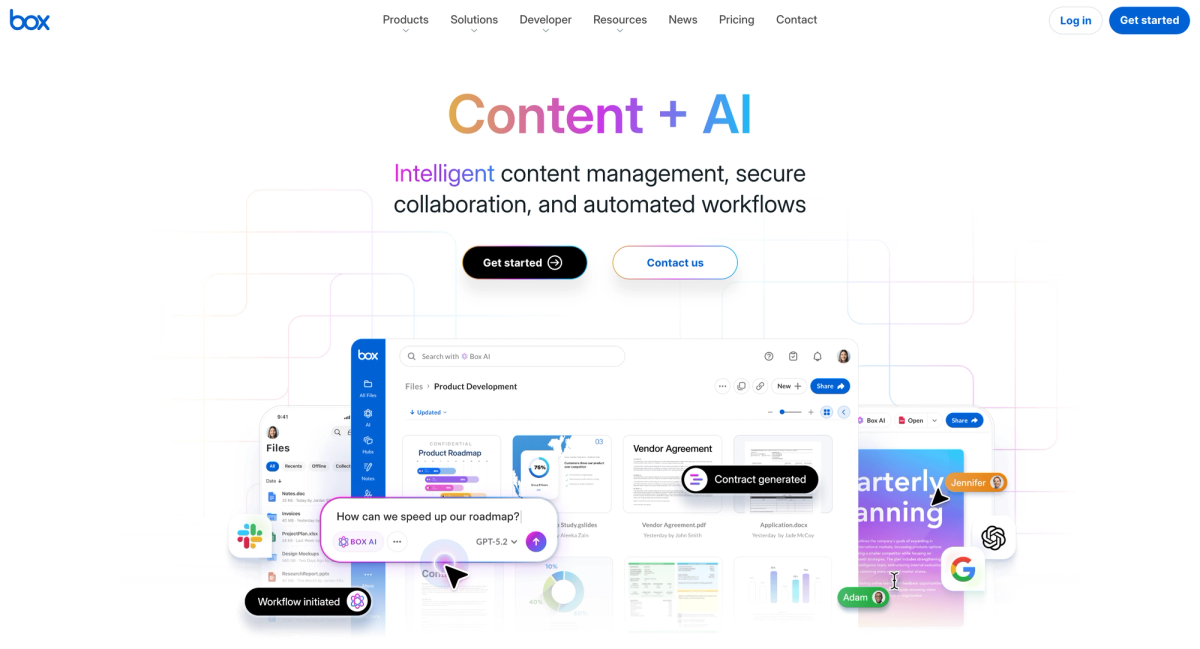
Box is an enterprise file management platform. It handles compliance, audit trails, Active Directory integration, and large-scale internal document workflows for organizations with dedicated IT teams. If that is what you need, Box can deliver it — at a price, and with significant support limitations that its Trustpilot rating of 1.2 out of 5 reflects in remarkable detail.
If you are an agency, studio, consultancy, or any client-facing business that delivers finished work to clients and wants that delivery experience to reflect your brand, Box is solving a different problem than yours. This article is about what that problem actually looks like, and which alternatives have been built to address it.
What agencies actually need from a file sharing platform
The core requirement for client-facing file delivery is straightforward. You need clients to receive files through an experience that looks like it belongs to you, not to the platform you are paying to use.
That means a download link on your domain. A page that shows your logo and your name. An email notification from your address. A recipient who does not need to create an account or sign into anything to access what you sent them.
Box does not offer any of this. When you share files with a client through Box, they land on box.com. If they need to collaborate or upload files back to you, they need a Box account. The notifications they receive come from Box. You are paying for the storage and delivery; Box owns the client touchpoint.
For internal team storage, this may be irrelevant. For an agency where every client touchpoint either reinforces your professionalism or quietly undermines it, it is a real problem.
Where Box actually falls short
The complaints about Box's billing practices are extensive and well-documented. Over 90% of the 282 reviews on Trustpilot are one star. The themes that appear repeatedly are worth understanding before considering the platform.
The most significant is what happens when customers try to leave. Multiple reviewers describe discovering that auto-renewal cannot be turned off by the account holder — it is controlled by Box. Sally from Australia confirmed this directly with a Box support agent, who told her that auto-renewal is not a setting visible or accessible to customers. She had to escalate to her bank and a consumer protection authority before receiving a refund.
Adding seats to an account is instant and automated. Reducing seats requires emailing a specific address that multiple reviewers describe as unresponsive, calling a support number that transfers to billing, and submitting tickets that go unanswered. Tom Elliott from the UK, after a folder structure restoration failure destroyed months of organized files, paid extra just to download his own data through an FTP client before he could leave. The customer support response was FAQ links.
John Darby from the US opened an account solely to view a file someone sent him. Box charged him $60 per month. Denied a refund.
These are not edge cases. They are the most common thread across hundreds of reviews spanning multiple years, with no indication of change.
None of this makes Box suitable for an agency that values its reputation for treating clients professionally. How a company treats its own customers when things go wrong tells you something about the culture behind the product.
The alternatives that actually exist for agencies
Nextcloud
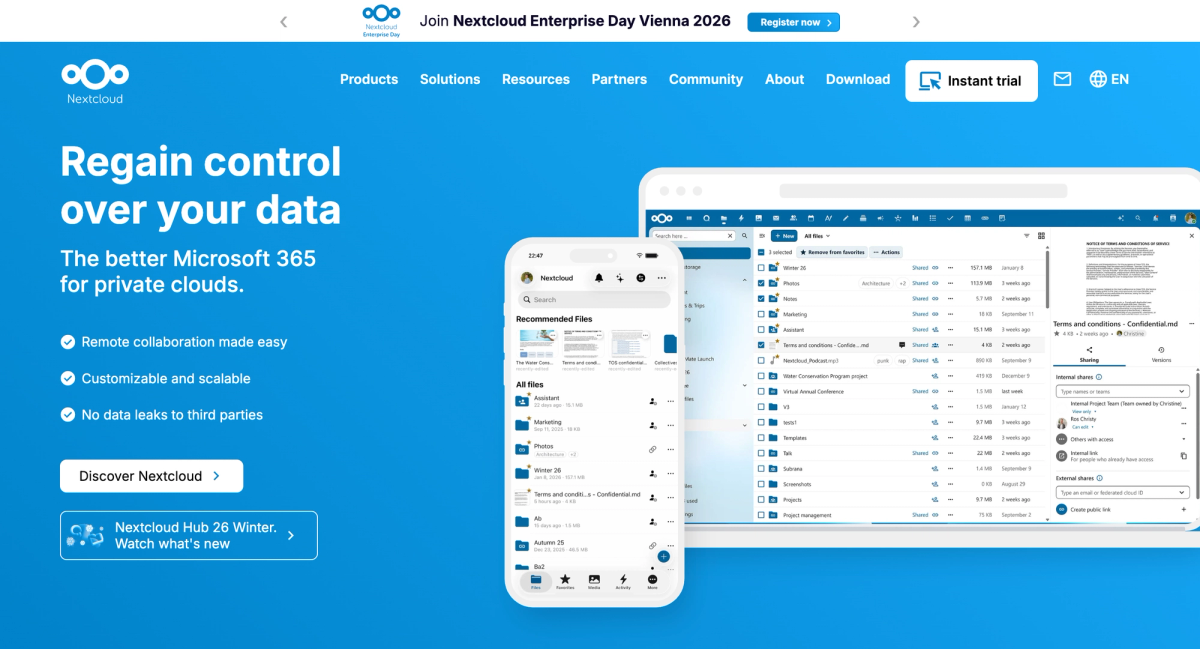
Nextcloud is a self-hosted, open-source file sharing platform. It gives you complete control over your data, your infrastructure, and your branding. There is no per-user fee and no platform vendor to negotiate with.
The real cost is operational. You need a server, someone who can configure and maintain it, security updates, backup systems, and someone to call when it breaks. For a ten-person agency without a dedicated IT administrator, this is a significant ongoing burden that most teams underestimate before committing.
Nextcloud is a genuine option for organizations with technical resources who want full sovereignty over their infrastructure. For most agencies, the maintenance overhead is not worth it.
Hightail
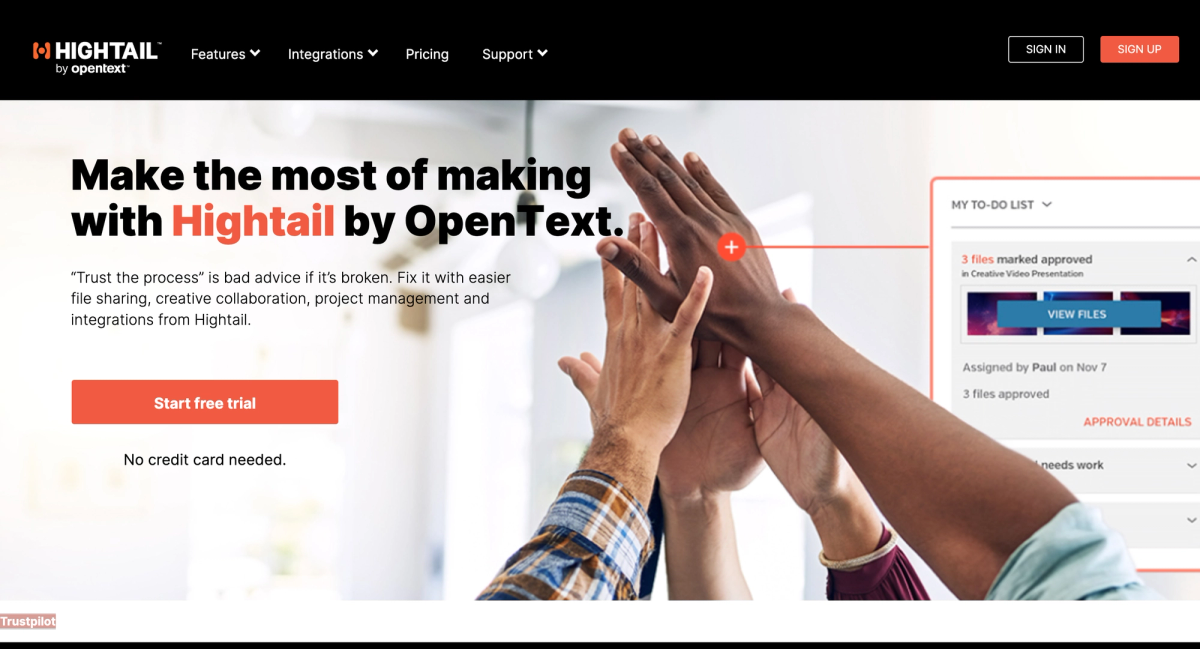
Hightail is built for creative professionals and positions itself around large file delivery and client feedback on creative assets. It includes annotation and review tools, which makes it useful for teams that send visual deliverables and collect structured feedback.
It charges per user, and the branding customization is limited. Your clients still interact with Hightail's interface. It solves the large-file delivery problem but not the white-label problem.
ShareFile
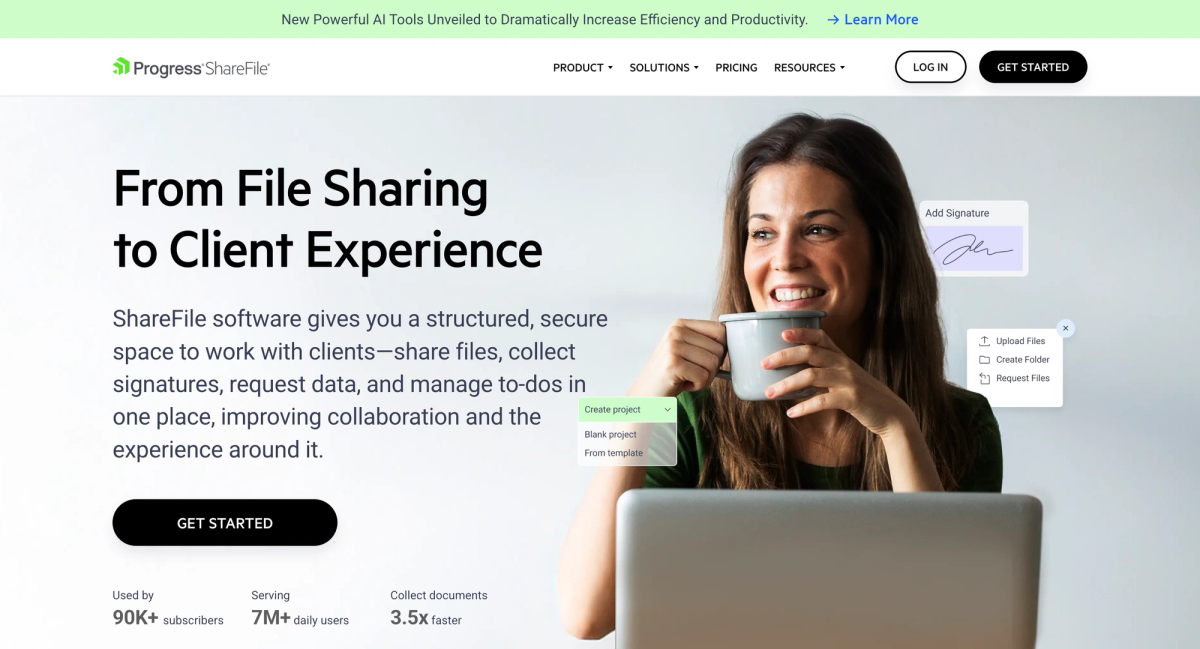
ShareFile is designed for professional services: accounting firms, law offices, consultancies. It handles secure client portals and has strong compliance features. It supports some custom branding at the portal level.
It is priced accordingly and aimed at regulated industries, not creative agencies. The setup is involved, and the per-user costs accumulate quickly for teams that add and remove contractors.
Sharebrand
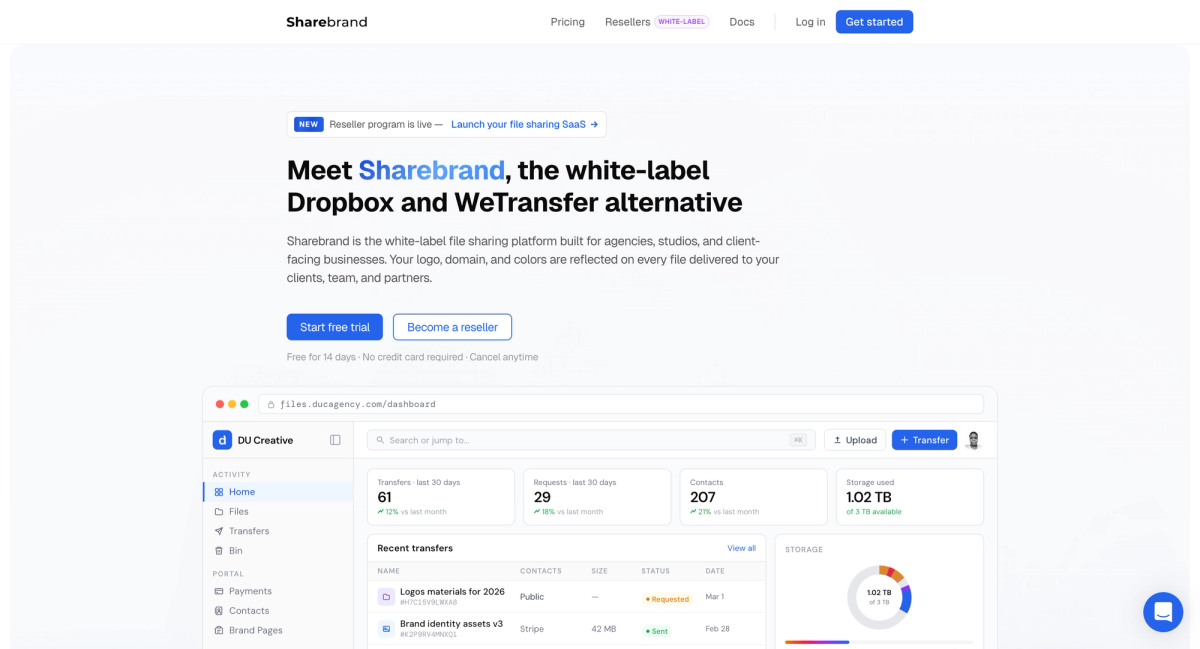
Sharebrand was built specifically for agencies and client-facing businesses that deliver work and want the client experience to be entirely theirs.
When you set up a Sharebrand workspace, you connect your own domain, configure your branding, and set up email delivery from your address. Every file your client receives comes through a page that shows your name and your logo. The link is on your domain. The email is from your address. Sharebrand does not appear anywhere in the client experience. Your clients never know which platform you are using to power the delivery.
Recipients do not need an account to download files. No friction for your clients. No Box login screen. No sign-up prompt. They click, they download, they move on.
The Starter plan is $29 per month for 3TB of storage, five team seats, and transfers up to 50GB. Pro is $59 per month for 6TB, ten team seats, transfers up to 100GB, and removes the "Powered by Sharebrand" attribution from client-facing screens. Neither plan charges per user beyond the included seats.
The trial runs 14 days. No credit card required to start. You evaluate the product with full access, and you add payment details after you have decided it is worth keeping. That is the correct order of operations for a trial.
Cancellation is handled from your account settings. Your files are stored across two independent enterprise-grade systems: Cloudflare's infrastructure as primary storage, Backblaze as secondary backup. Both maintain data centers in the EU and the US. In the unlikely event of a failure at either layer, the other holds your data. Files are not held hostage when billing disputes arise.
For agencies that want to go further, the Reseller plan at $99 per month gives you the infrastructure to run an entire branded file delivery service for your own clients — your domain, your pricing, completely independent of Sharebrand's branding. You provision client workspaces, set your own rates, and keep everything you charge. Sharebrand handles the platform. You own the product your clients see.
The right question to ask
Before choosing a file sharing platform as an agency, the question is not which tool has the most storage or the most compliance certifications. It is: when my client receives a file, whose name do they see?
Box's answer is Box's name. The alternatives above give varying degrees of control over that answer. Sharebrand's answer is yours, every time.
Sharebrand is a white-label file sharing platform for agencies, studios, and client-facing businesses. 14-day free trial, no credit card required. Start at sharebrand.io.