Free Dofollow Nofollow link checker
We just launched a free dofollow nofollow link checker. Check any URL and see instantly whether each external link is dofollow, nofollow, sponsored, or UGC.
If you have ever paid for a link placement, reached out to a directory, or submitted a guest post, you have probably wondered whether the link you got back is actually doing anything for your search rankings.
Most people never check. They assume the link is dofollow, file it in a spreadsheet, and move on. The problem is that a nofollow link and a dofollow link look identical in a browser. You cannot tell the difference by clicking it. You have to look at the page source, find the right anchor tag, and read the rel attribute. That takes time, and most people do not bother.
Sharebrand's dofollow nofollow link checker does this automatically. Enter any publicly accessible URL, click check, and the tool fetches the live page, parses every external link, and tells you whether each one is dofollow, nofollow, sponsored, or UGC. No account required. No installation. Free to use as many times as you want.
Why it matters for link building
Search engines use link equity to determine how much authority one page passes to another. A dofollow link passes that equity. A nofollow link carries a rel="nofollow" attribute that instructs search engines to treat it as a hint rather than an endorsement. Google has said nofollow links may still pass some value, but the consensus is that dofollow links are the primary driver of ranking authority.
When you build links, you want to know which ones are contributing. If a directory listed you as a dofollow source and then changed its policy, your link stopped working for you without any notification. If a site promised you a dofollow placement in exchange for a fee or a partnership, you deserve to verify that claim before or after the deal closes.
This tool surfaces that information in seconds.
What the tool checks
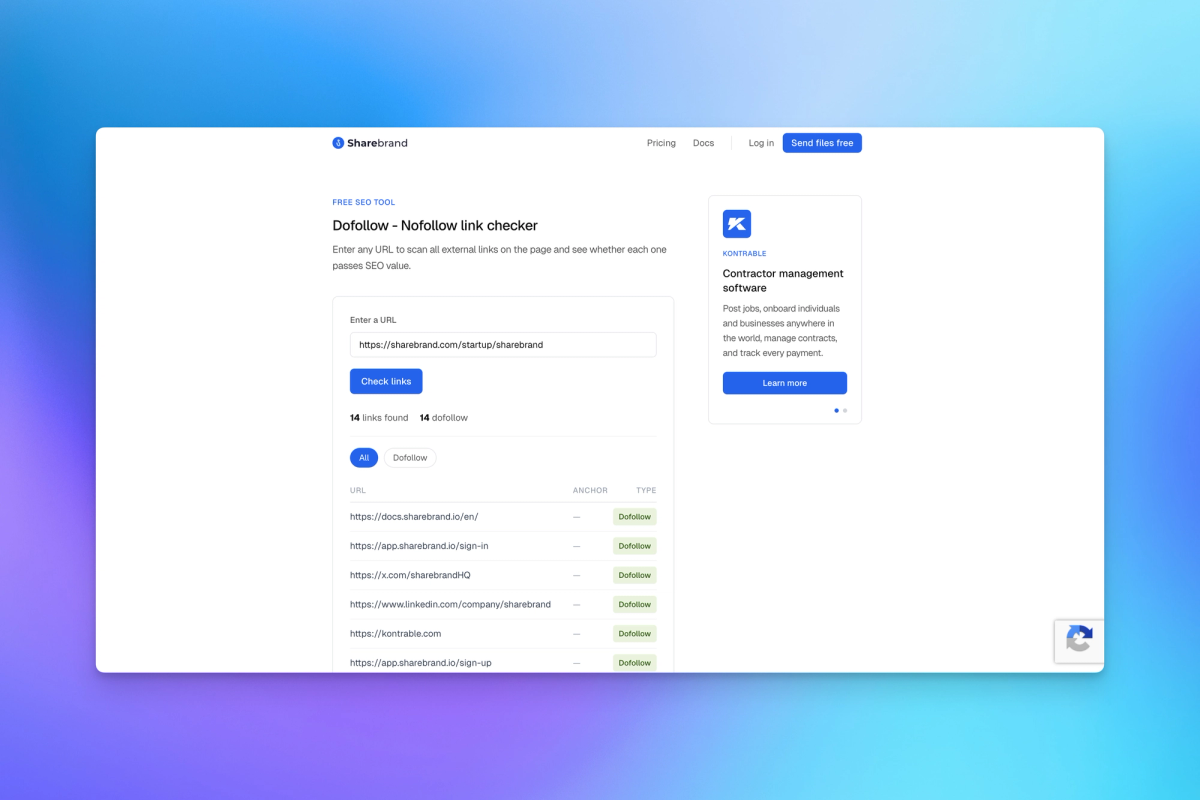
Every external link found in the HTML of the page you enter. Internal links on the same domain are excluded. Results reflect the live state of the page at the moment you check, so you can re-run the same URL any time and see if anything has changed.
The tool categorises links by four rel values. Dofollow means no rel restriction is applied — search engines follow the link and pass ranking value. Nofollow means the link carries rel="nofollow" and is treated as a hint. Sponsored identifies paid placements and affiliate links marked with rel="sponsored". UGC applies to community and forum content marked with rel="ugc". Both sponsored and UGC are treated as nofollow hints for ranking purposes.
How to use it for competitor analysis
Scanning your own pages tells you what you are passing to external sites. Scanning a competitor's page tells you where they are sending link equity, which directories, publications, or tools they are endorsing through dofollow links. That list is a ready-made prospecting sheet for your own link building.
If a competitor's resource page links dofollow to ten tools, and one of those tools is a direct competitor of yours, you now know a placement worth pursuing.
How to use it to audit a directory submission
Before submitting to any paid or free directory, check the directory's listing pages to confirm they pass dofollow links. Many directories charge a listing fee and deliver a nofollow link in return. Checking before you pay takes thirty seconds. Checking after tells you whether to ask for a refund or deprioritise that placement.
The Sharebrand directory at sharebrand.com/startups and sharebrand.com/agencies passes dofollow links on all listings, free and featured. That is the founding principle of the directory. This tool lets anyone verify it instantly.
Check your links now
The tool is live at sharebrand.com/dofollow-nofollow-link-checker. No account. No sign-up. Enter any URL and see the full link profile immediately.
Built by Sharebrand. This tool is free with no account required. It scans the live page at the moment you check, so results always reflect the current state. If you find a directory or publication that promised a dofollow link and delivered something else, this is how you confirm it.